Emancipation  
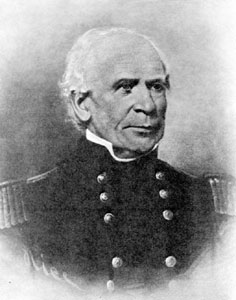
Within two years of Adams’ speech, his arguments found their
first practical application when General Jesup offered
freedom to rebellious Black Seminoles in Florida. Jesup made
the offer for military reasons, to separate the blacks from
the Indians; this move, he wrote the Secretary of War, would
“weaken [the Indians] more than the loss of the same number
of their own people.” Significantly, “Jesup’s proclamation,”
as the Black Seminoles came to call it, was the first
emancipation of rebellious blacks in U.S. history.* And it
was implicitly premised upon federal authority under the war
powers.   
Sources: Jesup to Poinsett March 18, 1838, as cited in Porter Black
95, Littlefield Africans and Seminoles 26-28,
Giddings Exiles 327, House Document 25.3 225: 80, 88.
©
*There were many precise details defining who received
freedom under Jesup’s Proclamation. He made the offer to
black allies of the Seminoles who came in for surrender, and
Jesup distinguished this group from allies whom the
Seminoles themselves handed over. The first group were to go
west as free men and women, the second group as traditional
slaves of the Seminoles. Jesup did not explicitly promise
freedom to slaves who fled plantations during the war, only
to the Seminole allies, i.e., the established “Indian Negro”
maroons. In at least 42 documented cases, however, and
probably more that remain to be documented, the army allowed
plantation slaves to go west anyway. The process took place
under the auspices of a board to review cases where whites
claimed ownership of surrendering blacks who said they were
allies of the Seminoles. The board compensated owners who
could prove their claims, and then shipped the rebels west,
explaining they were too dangerous to keep on the
southeastern frontier. Military records show at least 42
slaves moved west overtly through the board review system.
Beyond these fine points, it’s worth noting that
slaveholders tended to view all of the black combatants in
Florida, both maroons and plantation slaves, as
slaves-in-revolt. This view toward the Black Seminoles
threatened their liberty, led to many of the tensions that
produced the Second Seminole War, and ultimately
necessitated Jesup’s extraordinary offer of emancipated
status to the maroons.
Part 4, Freedom: l |