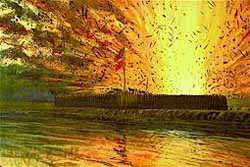
Negro Fort  
At the end of a tense standoff lasting several days, Garcon and his men
hoisted the Union Jack. On July 27, they fired upon the U.S. gunboats in
defiance. The gunboats fired back. The ninth U.S. round was heated red hot. The
cannon ball penetrated the magazine of the fort, causing a massive explosion.
Clinch described the scene in an account written for the Army & Navy
Chronicle: "The explosion was awful .... In an instant lifeless bodies were stretched upon the plain
... or suspended from the tops of the surrounding pines. Here lay an innocent babe, there a helpless mother
.... The brave soldier was disarmed of his resentment and checked his victorious career, to drop a tear on the distressing scene."
[More]
More than 250 Black Seminoles, free blacks, and Indians
died in the ensuing carnage. Creek mercenaries captured as
many of the survivors as possible. Within weeks the Creeks
had divvied up the survivors among various southern
slaveholders. The Creeks also salvaged a treasure trove of
weapons from the ruins: 2,500 muskets, 50 carbines, 400
pistols, and 500 swords. Jackson’s plan had been a complete
success. In one blow, his armies had destroyed the heart of
black resistance in western Florida.
  
Sources:
Army Navy Chronicle 2: 114-16, ASPFR 4: 559-60, ASPMA 1: 700, 703.
©
Part 1, Early Years: l
|